

BREAKING: New Evidence Shows ESC Approach Shortens Hospital Stay for Infants with NOWS
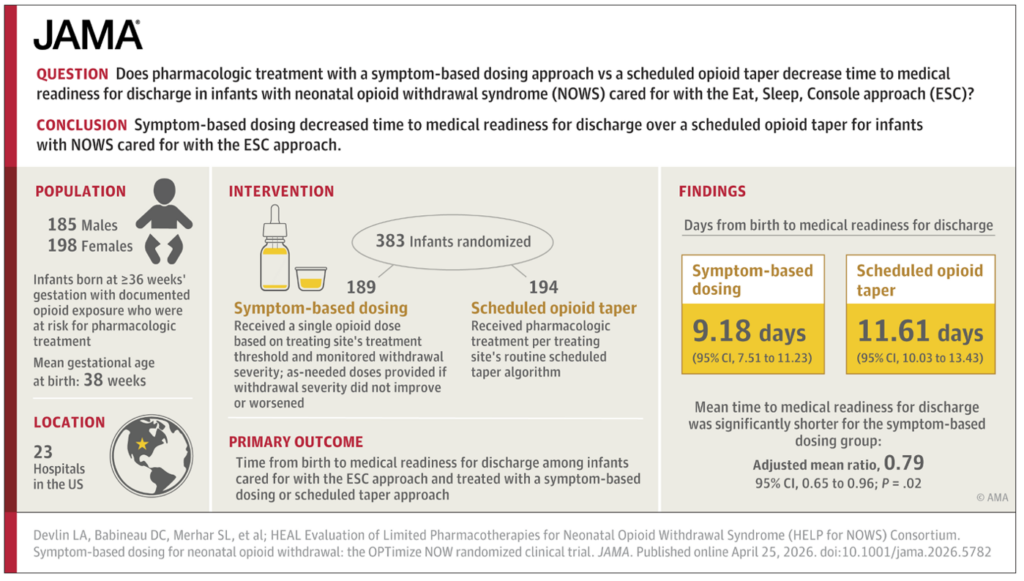
After years of research on a multi-center trial from the NIH Helping to End Addiction Long-Term® Initiative (HEAL), Lori Devlin et al recently published results comparing Eat, Sleep, Console (ESC) pharmacologic treatment based upon symptoms and Finnegan-scheduled opioid taper with their OPTimize NOW trial.
Key Findings
- ESC-based care reduced average time to discharge:
- Infants in the ESC group averaged 13.1 days to discharge readiness
- Finnegan-based care averaged 17.5 days
- Study included 23 U.S. clinical sites
Expert Perspectives
The trial does not ask whether ESC works—that answer exists in previous literature. It asks whether, having adopted most components of the initial ESC bundle we can do even better by treating pharmacologically only what each individual infant actually requires. For institutions still relying on Finnegan-based care, the OPTimize NOW trial adds urgency to a transition that is already overdue.
— Grossman M, Berkwitt A, Osborn R. As-Needed Medications in Newborn Opioid Withdrawal: A Better Standard. JAMA. April 25, 2026. doi:10.1001/jama.2026.6412
If you need valuable evidence from 23 U.S. units to integrate Eat, Sleep and Console, put this on your administration’s desk.
— Maureen Shogan, MN, RNC & Clinical Director, Neowithdrawal
Interested in implementing the ESC model of care at your institution? Contact us to learn how we help hospitals successfully transition to evidence-based ESC care practices: info@managedhealthconnections.com
Recent Comments